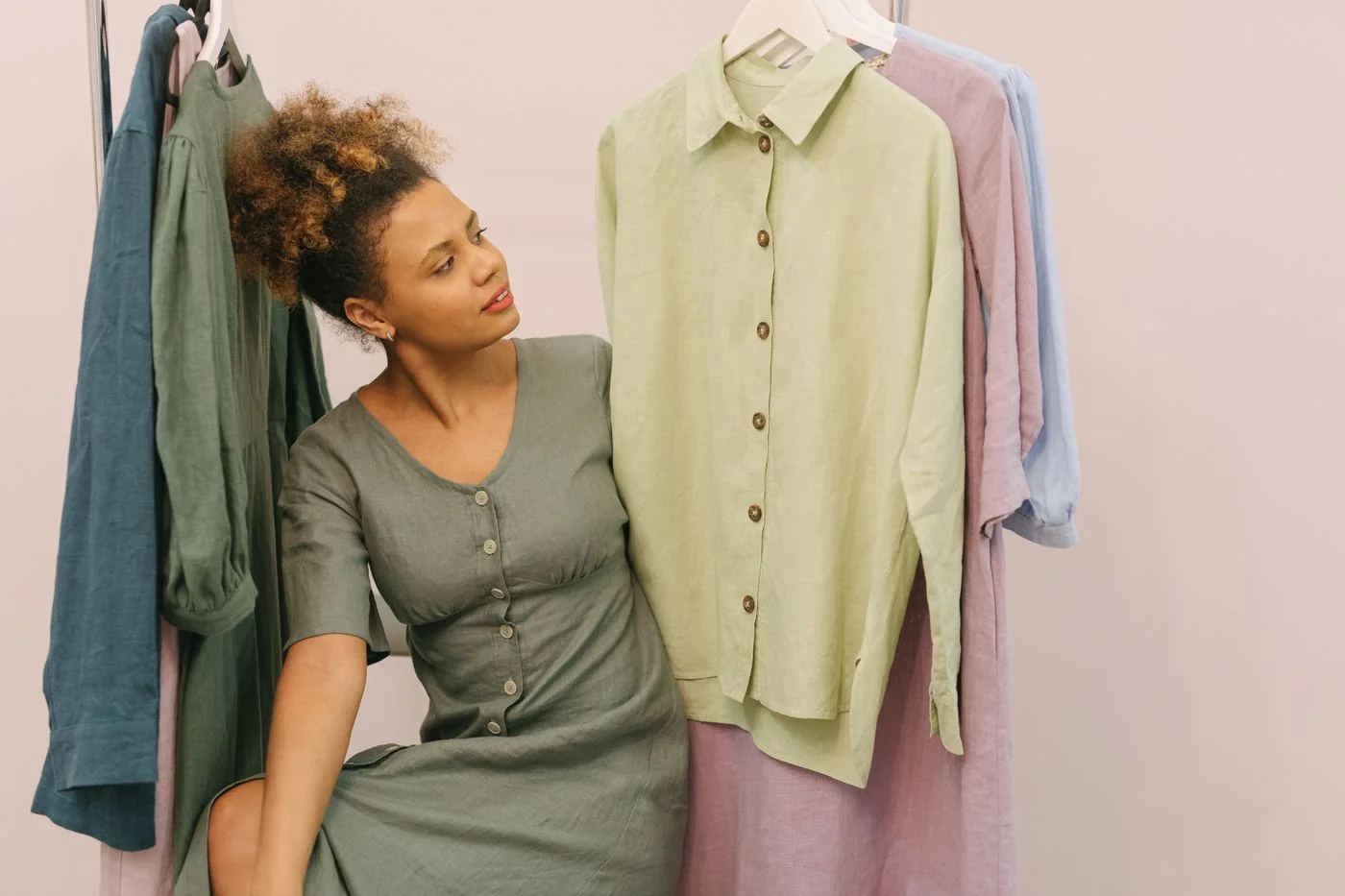
Read a Waistcoat and Shirt Front as One Outfit Group
Read a waistcoat and shirt front as one parent outfit group, comparing the retained collar, fastening and visible fabric before adding detail to an already structured neckline.

Bring the two garments together
A waistcoat and shirt can each look simple on a hanger while creating several lines when worn together. Start with the actual retained pair and the lower garment you intend to use. Look at the collar, waistcoat opening and shirt front as one group.
Do not assume that two garments sharing a color will automatically sit well together. Their construction, length and visible volume matter. A parent building an ordinary outfit needs the actual combination to work, not only a promising flat arrangement.
Use the waistcoat's intended fit
Fasten or leave the waistcoat open only in the ways its design supports comfortably. Look at where its edges sit beside the shirt placket. A clear opening can frame the shirt, while a closed version makes the waistcoat's own shape more dominant.
If fastening causes unexpected pulling, address the actual fit question rather than hiding it with an accessory. Do not use makeshift clips or assume an alteration is straightforward without advice about the specific garment. The chosen arrangement should work in its real state.
Compare the shirt details
A pronounced collar, ruffled front or strong cuff can add another feature. Begin with the quietest suitable retained shirt to understand the waistcoat's contribution. Then compare a more detailed option only if you genuinely want that added activity.
Keep the lower garment and shoes unchanged during the first comparison. If the group feels crowded around the middle, look at the shirt hem, waistband and waistcoat length together. A different retained shirt may resolve the boundary without a new waistcoat purchase.
Include seated and layered views
Sit and stand as appropriate to the setting, then look again after the clothes settle. The combination should not depend on constant pulling to keep the front aligned. A parent outfit for an indoor gathering may spend more time seated than the standing mirror view suggests.
If a coat is part of the day, compare the complete layered group. Keep the actual garments' care and use requirements involved. A tidy neckline cannot establish that every layer has enough room or the same maintenance routine.
Compare a plain shirt front with any detailed candidate while keeping the same waistcoat arrangement. If the simpler version reads more clearly, keep that result before adding another neckline feature. Record the pair that works and the fastening arrangement you prefer. A clear reference to the actual waistcoat and shirt is more useful than a general rule about formal or casual layering. The successful group can be quiet and complete without a necklace or another matching detail. Its structure comes from the retained garments themselves, with the parent wearing them able to move through the day rather than maintain a posed arrangement.
If the shirt collar and waistcoat opening both compete for attention, compare a quieter retained shirt. This gives the structured outer shape a fair view before jewelry enters the group. Another decorative detail should not conceal the original comparison.
Related reading
Try a Parent’s Blazer Through the Seated Parts of the Day, Give a Parent’s White Shirt a Clear Ready Outfit Role.