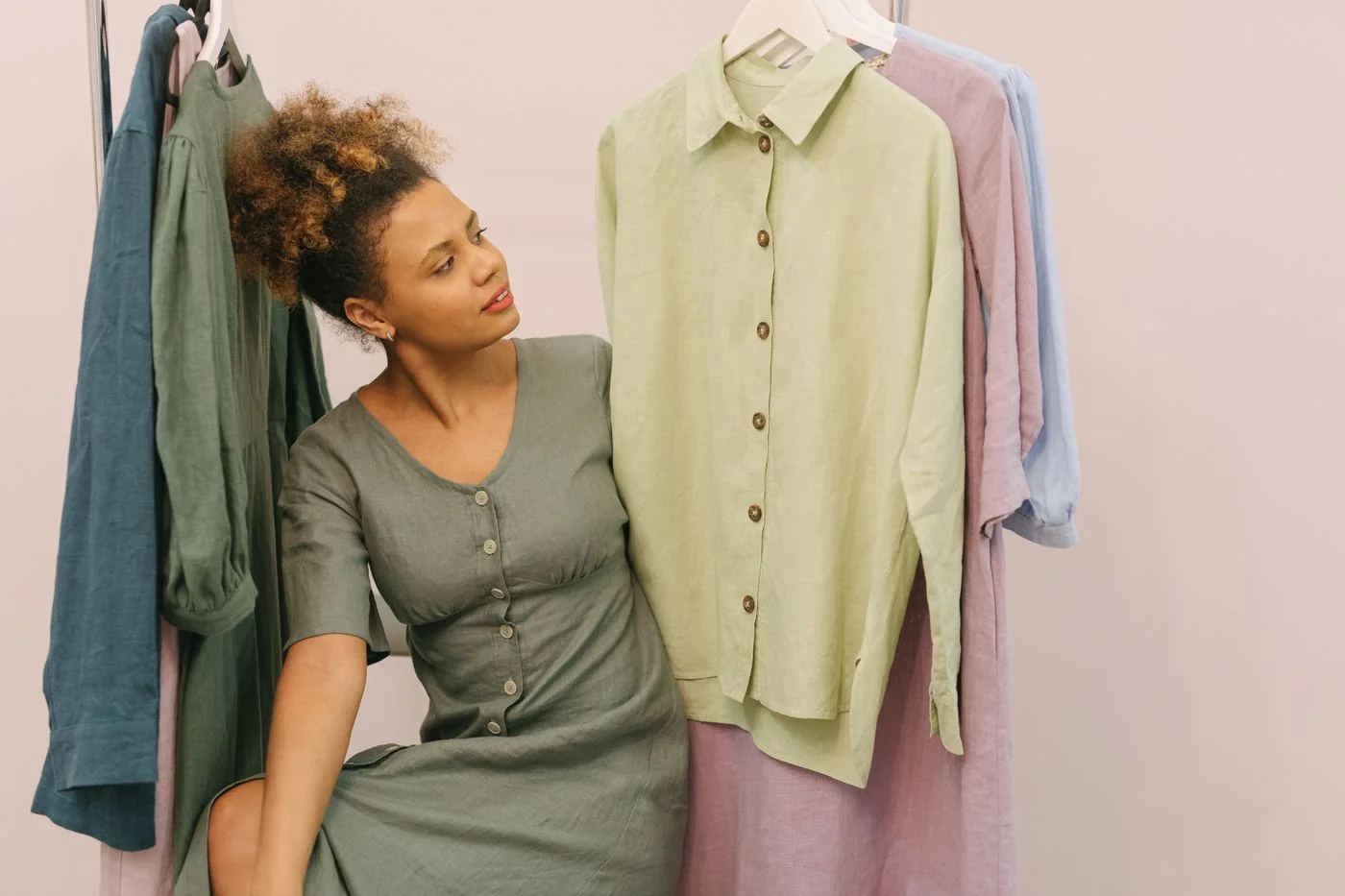
Choose a Dark Top for Its Visible Role Under a Retained Layer
Choose a dark top for its visible role under a parent’s retained outer layer, comparing neckline, surface and the indoor outfit before treating every plain base as interchangeable.

Decide what the top needs to show
A dark plain top may seem like a universal base, but its visible role changes under different layers. Put it on with the retained jacket, cardigan or shirt you actually intend to use. Notice the area that remains visible at the neckline and front.
For a parent moving between indoor and outdoor settings, the top also needs to work when the layer comes off. Compare that version before deciding the outfit is complete. A small visible panel beneath a jacket is not the same clothing role as a full standalone top.
Compare neckline shapes
A higher neckline can create a continuous dark area, while a lower one leaves a different shape inside the outer layer. Choose from suitable retained garments and keep the rest of the outfit unchanged during the first comparison.
The question is not which neckline every parent should wear. It is which actual combination suits your comfort, preferred coverage and day's activities. Use a real fitting comparison rather than assuming a stock photograph establishes those things for you.
Include surface and construction
Two dark tops can differ in texture, sheen and opacity. Look at the physical garments in ordinary light and read their actual material information. A familiar color name does not make their construction or care interchangeable.
If the outer layer is strongly textured or patterned, a quieter surface may keep the group readable. If both pieces are very plain, you may enjoy the simplicity without adding another detail. Do not buy a textured base merely because a plain one seems too ordinary on its own.
Check the full worn group
Include the actual lower garment and shoes. A top that works at the neckline may create a hem boundary you do not enjoy, or need a different suitable underlayer than expected. Assess the complete outfit rather than only the jacket opening.
Use ordinary movement within the setting and let the clothes settle naturally. Avoid temporary pinning or pulling to create a fit that will not remain. A proposed alteration is a separate decision requiring advice about the actual garment.
Save the pairing that serves both the layered and indoor views. Name the specific top, not simply a black base, so you can repeat the neckline and surface relationship. If a gap remains, write it clearly before shopping. The useful dark top earns its place through a real visible role and suitable everyday use. It should support the parent's retained clothes without making several different garments appear interchangeable merely because they share a dark color.
Name the top by its neckline and actual garment identity in the outfit note. That prevents a different dark top being substituted later and unexpectedly changing the visible opening. The color alone does not describe the useful relationship.
Related reading
Choose Different Suitable Layers for One Family Outing, Choose a Parent’s Coat Around the Dark Outfit Base.