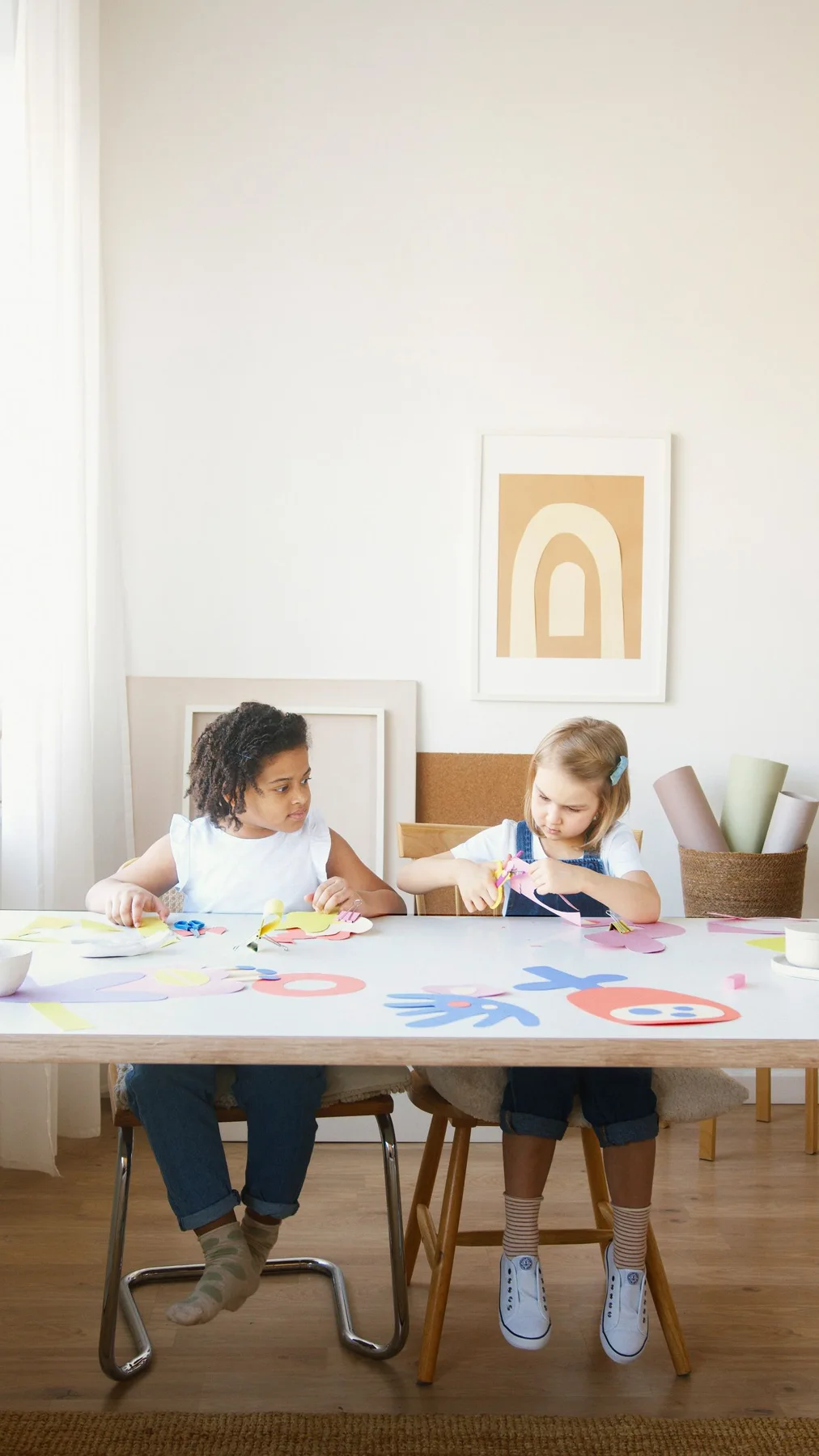
Agree How a Shared Drawing Project Can Change
Two people can sit at the same table while imagining different ownership of the drawing between them.
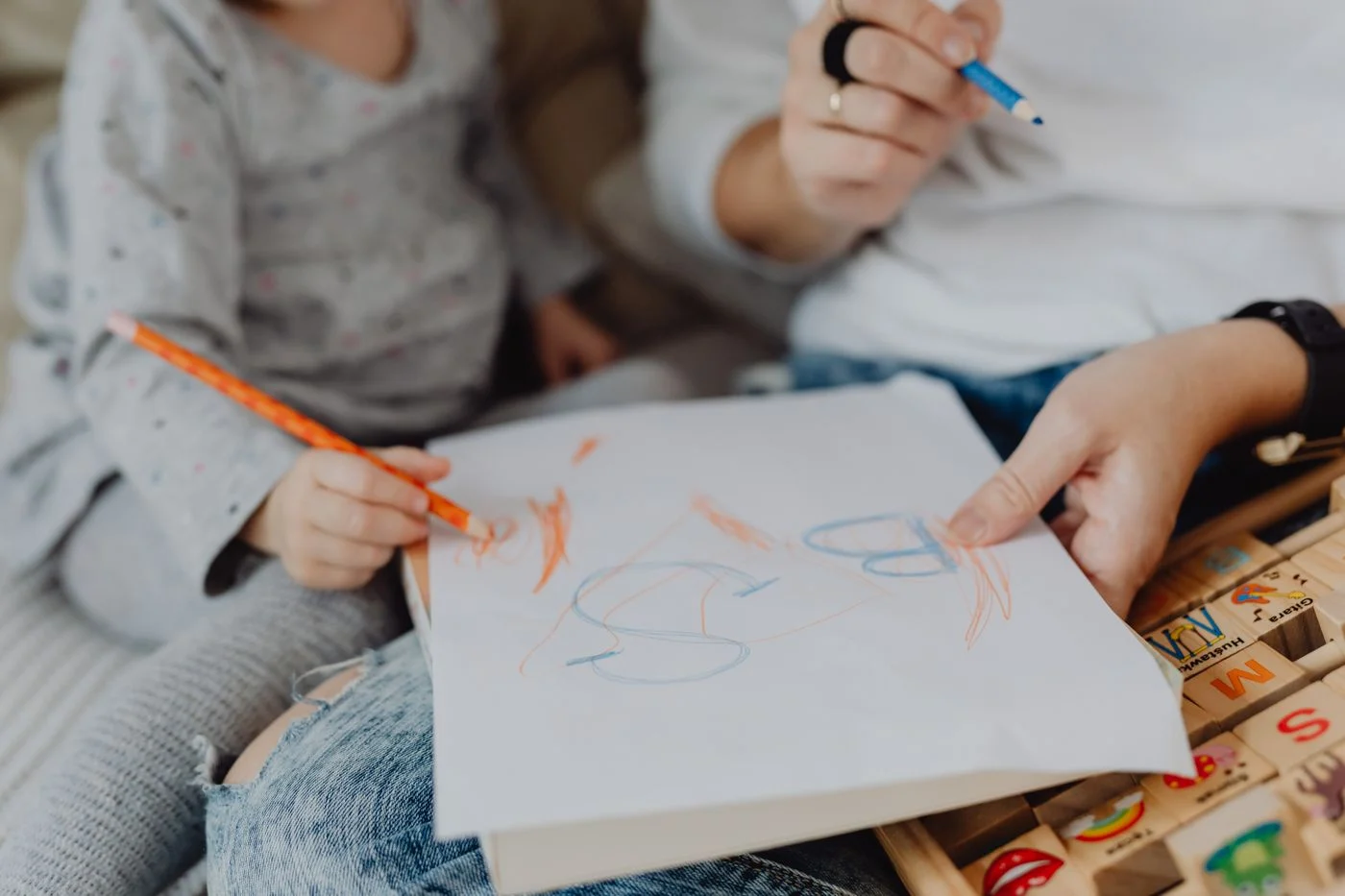
Choose whether the paper is shared
Two people can sit at the same table while imagining different ownership of the drawing between them. Agree whether the project uses one shared sheet or separate personal work before adding marks. A shared surface does not automatically make every unfinished picture available to change.
Keep participation appropriate to the actual people, with adults responsible for materials, tools and supervision. This article considers a household agreement rather than promising that a drawing activity teaches a particular social or developmental skill.
Name the parts people want to keep
Ask what each participant is working on and whether another person may add to it. A simple ordinary conversation can be enough. Avoid imposing a complicated division if the group prefers independent sheets with an optional shared display later.
If one sheet is chosen, agree a usable arrangement that leaves suitable working space. An empty border or another clear section can have a role only where the participants actually want it. The paper does not need to follow an adult's complete imagined design.
Ask before adding or changing a mark
Keep permission connected to the actual moment. Someone who welcomed one addition may prefer another area to remain unchanged. Offer a separate suitable paper option where that better serves the person's idea instead of treating a disagreement as failure.
Use the materials within their actual requirements and avoid mixing unfamiliar products to resolve a design question. Creative choices can stay flexible among suitable options without making uncertainty about a product part of the activity.
Include a pause plan
Agree what happens if one participant stops before another. Keep the work in an appropriate material stage and position under the actual instructions. Do not stack or move it merely because the table needs to look clear.
Our artwork handover guide supports the next stage. The paper format guide keeps the occupied surface realistic. A shared project should not require an unsuitable storage arrangement to preserve the agreement.
Choose the finished role together
Ask whether the group wants to keep, display or appropriately pass on the work. Consider ownership and permissions before photographing or sharing it. Private names or school details in the image may need another arrangement.
Our material identity guide supports the tools' return. A useful shared drawing ends with understood work and suitable equipment stages, without requiring everyone to value the picture in the same way or turn it into a permanent household keepsake.
Shared-drawing questions
Does a communal table make the paper communal? Agree the actual project's ownership.
Can permission change during the activity? Ask about the specific addition rather than assuming one answer covers everything.
What if separate sheets work better? Choose that suitable arrangement without treating it as an unsuccessful shared session.