Make Space for Family Artwork to Dry Before Choosing Display Frames
Separate wet artwork, finished pieces and the display collection so a family art session can end without covering every available surface.
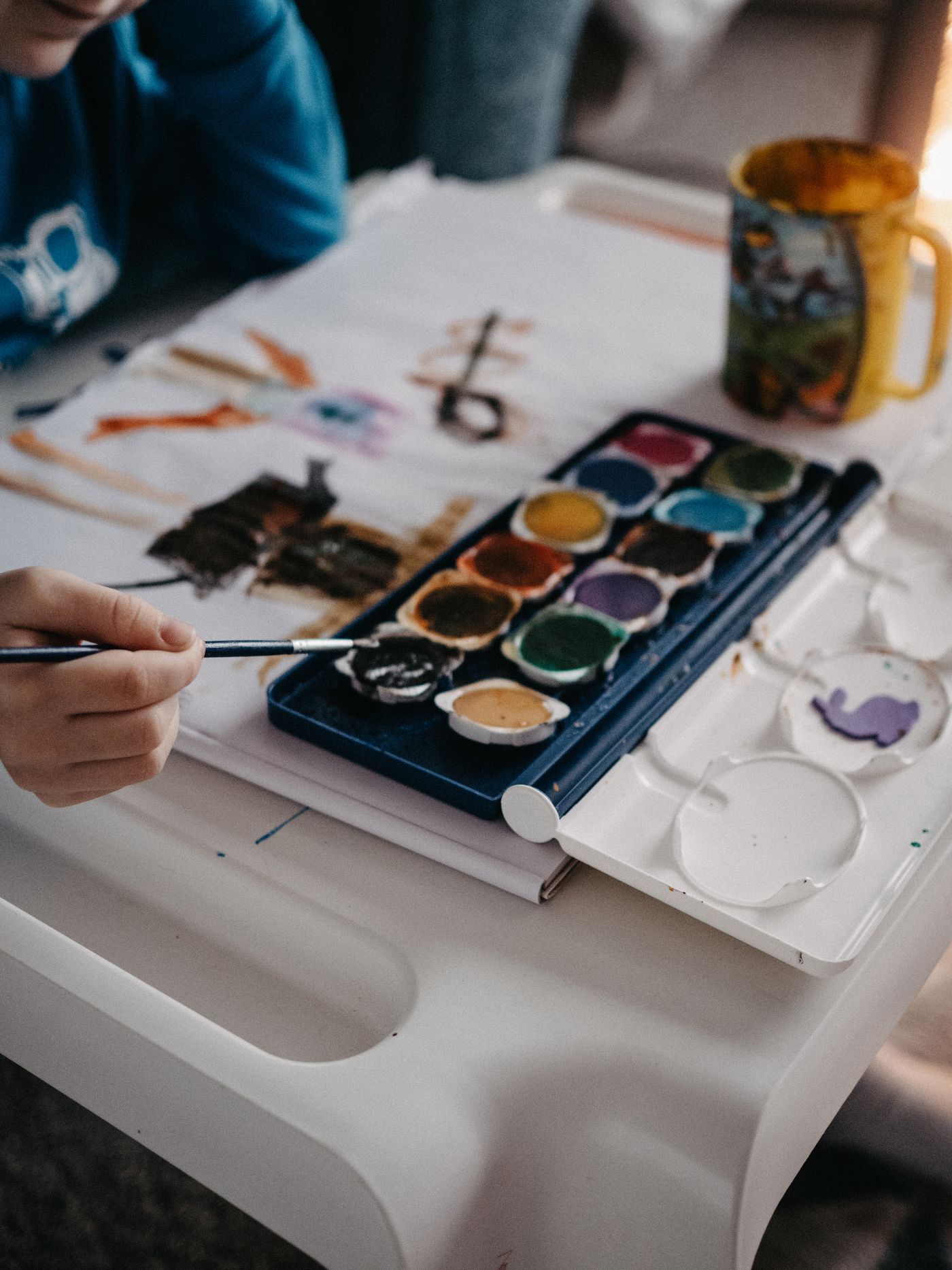
The difficult part of a family art session often arrives after the painting is finished. The table is needed for dinner, several sheets are still wet and there is no clear agreement about what should be kept. A drying and display plan gives the work a temporary home before the first paint pot is opened.
Reserve a temporary drying position
Choose a surface or product suitable for the materials being used and follow its instructions. Keep the work away from places where it could block a route, damage another surface or be disturbed by household activity. The drying position should remain available for the time the materials require.
Test the arrangement with blank paper first. Can several sheets lie without touching, and can an adult move them if needed without dragging a sleeve through another painting? Protect surfaces appropriately for the chosen activity rather than assuming that every art material washes away easily.
Distinguish the stages
Use three simple descriptions: drying, finished and chosen for display. A sheet should not move into a stack or folder until the material’s directions allow it. Keep names and any useful date on work in a suitable way so that ownership remains clear when several children make similar pieces.
Put unfinished projects in a separate place, with their materials stored according to the product guidance. A half-finished collage needs a different arrangement from a completed drawing. Returning both to a single overflowing pile makes the next session begin with a search.
Choose a display that can change
Decide how much wall or shelf space is available before buying frames. A small rotating display can give individual pieces more attention than filling every surface at once. Use fixing methods appropriate for the wall, the item and the household, following installation instructions and any rental conditions.
Consider access and handling. A display that requires dismantling several frames to change one picture may be updated rarely. A more accessible format can be useful, provided its components and position suit the household and do not create an unsuitable arrangement around young children.
Let the maker help select
When pieces are ready, ask what the child wants to show or keep. A favourite may have a story that is not obvious to an adult judging only the finished appearance. Keep the conversation manageable: choose a current display piece and a small group for longer storage rather than deciding the fate of an entire year’s work at once.
Photographs can record larger projects when keeping the original is impractical. Label the digital folder clearly, and keep family images in the household’s chosen private storage. Photographing a project does not require publishing the child’s name or work online.
Finish with a reset
Return supplies to their proper storage, clear the working surface and leave the drying position undisturbed. If the same overflow happens repeatedly, reduce the scale of the next activity or provide a more suitable temporary surface before buying more materials.
Our art-supplies guide helps choose a manageable kit. Storage and drying space should be planned alongside those supplies, rather than discovered when the first picture is complete.
Display questions
Must every piece be framed?
No. Choose a format that suits the work, available space and how often the display changes. A frame is a purchase decision, not a measure of how much the artwork matters.
What if a child wants to keep everything?
Agree on a defined storage area and review a small batch together when it becomes full. Avoid making an unannounced clear-out the routine.