Toy Storage That Makes Sense at the End of Play
Organize toys around how children choose and return them, with sensible container sizes and fewer confusing categories.
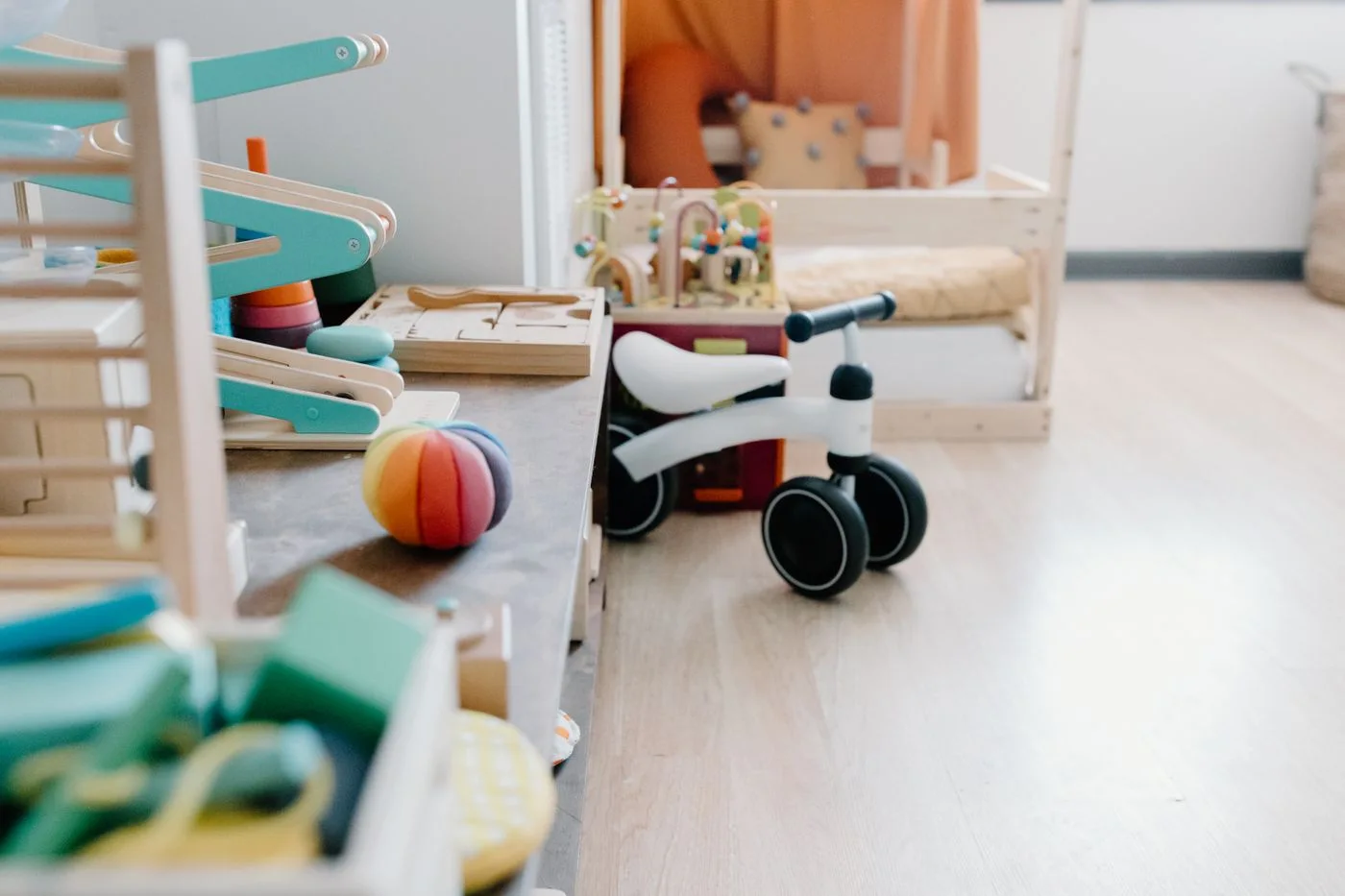
The end of play is rarely the moment anyone wants to sort twelve kinds of small objects. A storage system can look orderly while demanding too many decisions from the people expected to use it. Begin with a simpler question: can a child tell where this object belongs without asking an adult every time?
Watch how toys come out during a normal afternoon. Construction pieces may travel together, while pretend food gets mixed with dolls. Storage should acknowledge those patterns without letting every category collapse into one deep bin. The right level of sorting is the one the household can maintain.
Choose broad, recognizable categories
Start with a few groups based on use: building, pretend play, vehicles, and creative materials, for example. Adjust the labels to the toys actually owned. There is little value in an empty category created because a catalog shows six matching baskets. A picture label can help a non-reader identify a home for familiar objects.
Keep sets together where missing pieces prevent use. A puzzle needs a different approach from loose building blocks. Resealable bags or small boxes may help with components, provided they are appropriate for the child’s age and stored safely. Avoid making access so complicated that toys are abandoned before play starts.
Let container size do some of the work
A very deep bin can hide the most-used item at the bottom and invite the whole collection onto the floor. Shallower containers make contents easier to see. Check the weight when filled; a basket that is easy for an adult to lift may be too awkward for a child to move comfortably.
Open storage offers quick access, while closed storage reduces visual clutter. Combine them if needed: frequently used toys within reach and occasional materials elsewhere. Follow furniture anchoring and installation instructions. Keep small parts and age-restricted items away from younger siblings, even if that means the storage is less symmetrical.
Rotate with a purpose
Rotation can be useful when too many choices crowd a small room, but it should not become a demanding schedule of its own. Put away a few items that have been ignored and keep the current favorites accessible. Label the stored box so that adults do not have to reopen everything to find one requested toy.
Ask older children before removing belongings from their regular space. Something that appears unused may be part of an ongoing story or a project planned for tomorrow. Leave a designated spot for unfinished work where possible. Tidying need not mean erasing every sign of play each evening.
Buy fewer containers at first
Sort the toys before measuring for storage. Donate, recycle, repair, or dispose of items through appropriate channels only after checking their condition and the household’s decisions. Do not buy extra furniture simply to avoid making those choices. An initial trial with existing boxes can reveal which sizes are genuinely useful.
When buying, compare durability, handles, edges, cleaning instructions, and the fit within the shelf. Consider the whole system’s footprint, including room to remove a bin. A basket that fits tightly but catches every time it is pulled out adds friction to the task it should simplify.
Cleanup checklist
- Use a small number of clear categories.
- Keep complete sets identifiable.
- Choose containers the intended user can handle.
- Secure storage furniture appropriately.
- Reserve a place for work that continues tomorrow.
- Review overflow before purchasing another bin.
Reader questions
Should all toys be visible?
No. Visibility helps choice, but too much can overwhelm a small space. Keep everyday favorites accessible and store other appropriate items where adults can retrieve them.
How do shared rooms change the plan?
Give each child a small personal area alongside shared categories. The shared bedroom guide considers privacy and storage in a room used by siblings.
What is the most useful first purchase?
Wait until the trial arrangement shows a specific problem. Often one well-sized container is more useful than a complete matching range.