Count the Objects Needed for One Ordinary Family Dinner
Set an ordinary family dinner table by counting what the chosen meal needs, leaving shared dishes and unused extras off the surface until they are wanted.
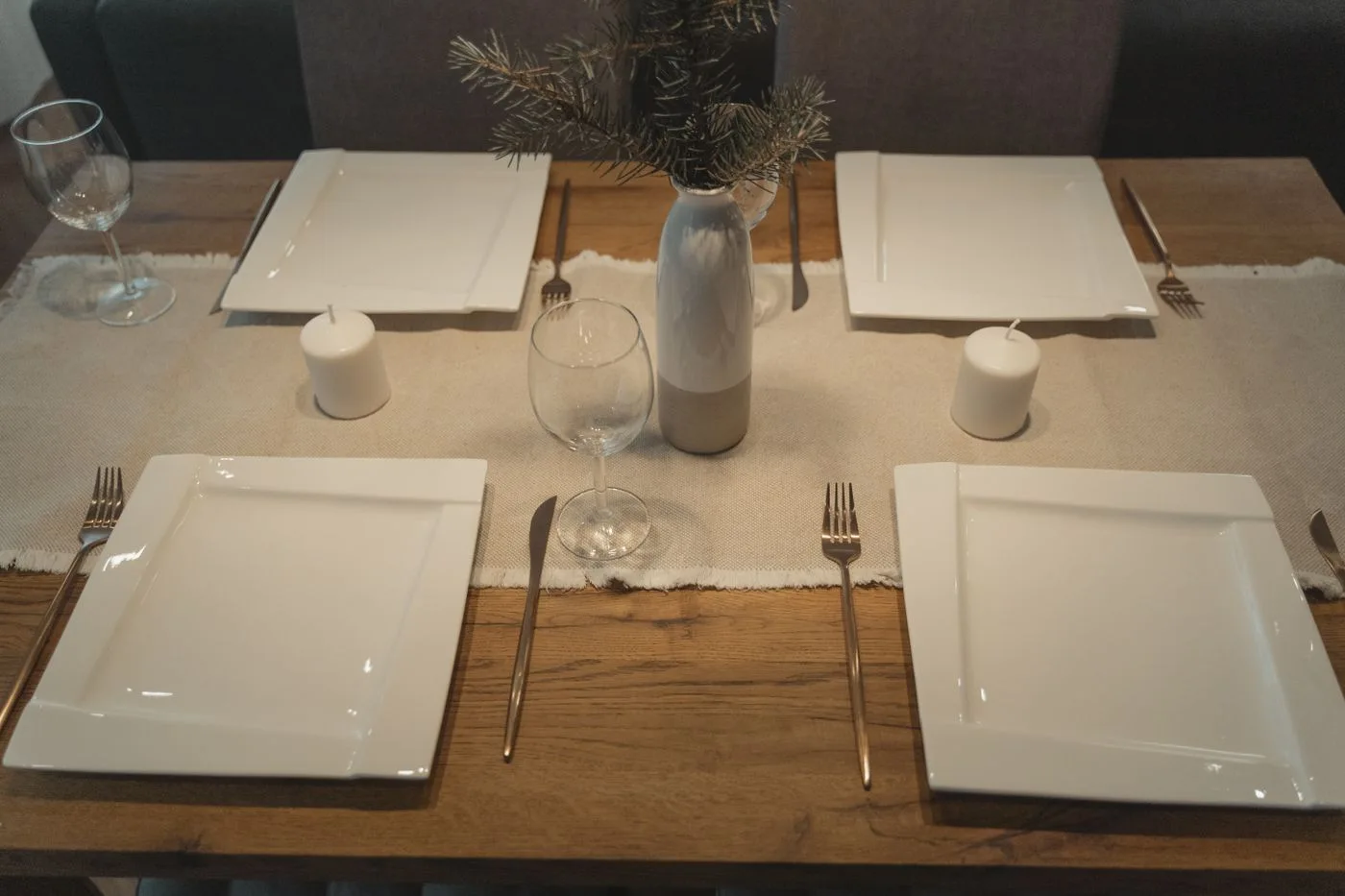
A table set for an ordinary dinner does not need every object used during a longer celebration. Counting what the chosen meal needs can leave more space for the people sitting there. Start with the menu and the number of seats, then add the serving pieces that have a real role.
Count places before decorative objects
Set a plate or bowl at each place needed for this meal. Choose the shape around the food being served, rather than using several layers simply because they stack attractively. Add the cutlery each person will actually need.
Check that each place can be used without reaching into the next person's setting. A square plate may occupy a different amount of table width from a round one. Leave room for hands and ordinary movement, not just a neat gap between the outer edges of the crockery.
Decide what is served from the middle
Name the shared dishes that must remain within reach. A bread basket, salad bowl or serving dish needs space for its handle or utensil as well as its base. Put one empty dish in the intended position before carrying hot food to the table.
If the surface is too crowded, serve part of the meal from a suitable counter or side surface. A shared dish does not have to occupy the center throughout dinner. Keep the route to it clear, and avoid requiring someone to lift a large object over another person's plate.
Give drinks stable individual places
Set out a suitable drinking vessel for each person and check that it can be reached easily. Tall glasses can interrupt sightlines and be easier to catch with a sleeve, while very wide mugs may crowd a small setting. Use the household's appropriate everyday choices rather than buying a uniform set for this exercise.
Keep refills on a separate surface if a large jug makes the table difficult to use. Pass or pour in a manageable way rather than stretching across several settings. The decision should suit the actual people at the table, including how they normally reach and handle their drinks.
Add back only useful extras
Place napkins where they can be picked up without moving the crockery. Add a condiment only if it belongs with the meal. A decorative object can stay if it leaves the practical spaces clear, but it does not need to compete with a serving bowl for the last available patch.
After dinner, notice what was never touched and what repeatedly had to move. That is useful information for the next ordinary meal. Set the unused extras aside before the following dinner and compare the space. A simpler table can still feel considered when the chosen objects support eating, serving and conversation.
Related reading
Small-Space Family Dining Without a Bigger Table by Default, Agree Suitable Helping Roles for a Family Meal.